Seborrhoeic Dermatitis and Hair Loss: Causes, Symptoms, Diagnosis and Treatment

Key Takeaways
- Seborrhoeic dermatitis can be linked to temporary hair loss, especially when the scalp is inflamed, irritated, or frequently scratched.
- The condition is common and usually manageable with a mix of medicated shampoos, anti-inflammatory treatments, and consistent scalp care.
- Hair usually grows back once the underlying scalp inflammation improves, but other causes of shedding should be considered if hair loss is patchy, sudden, or persistent.
- A doctor can confirm the diagnosis and rule out other scalp disorders such as psoriasis, fungal infection, alopecia areata, or telogen effluvium.
- People traveling for care can often plan diagnosis and treatment with a dermatologist, including follow-up that may continue after returning home.
Seborrhoeic dermatitis can sometimes contribute to temporary hair shedding, usually through scalp inflammation, itching, and scratching rather than permanent follicle damage. Understanding the skin condition itself is the first step toward easing symptoms and helping hair recover.
Overview
Seborrhoeic dermatitis and hair loss are often discussed together because an irritated, flaky, itchy scalp can make hair shed more than usual. In most people, the hair loss is temporary and related to inflammation, scratching, or a secondary effect of scalp discomfort rather than lasting damage to the hair follicles.
Seborrhoeic dermatitis is a common inflammatory skin condition that affects oily areas of the body, especially the scalp, eyebrows, sides of the nose, ears, chest, and back. On the scalp, it may look like dandruff, redness, greasy scaling, or stubborn flakes that return soon after washing. When these symptoms become persistent, many people notice more hair in the brush or shower drain and worry that the condition is causing permanent baldness.
The reassuring part is that the scalp usually improves once the inflammation is brought under control. Hair often becomes easier to manage, itching settles, and shedding gradually slows. Because several other conditions can mimic this pattern, a proper diagnosis is important, especially if the hair loss is patchy, rapidly worsening, or accompanied by pain or infection.
Symptoms
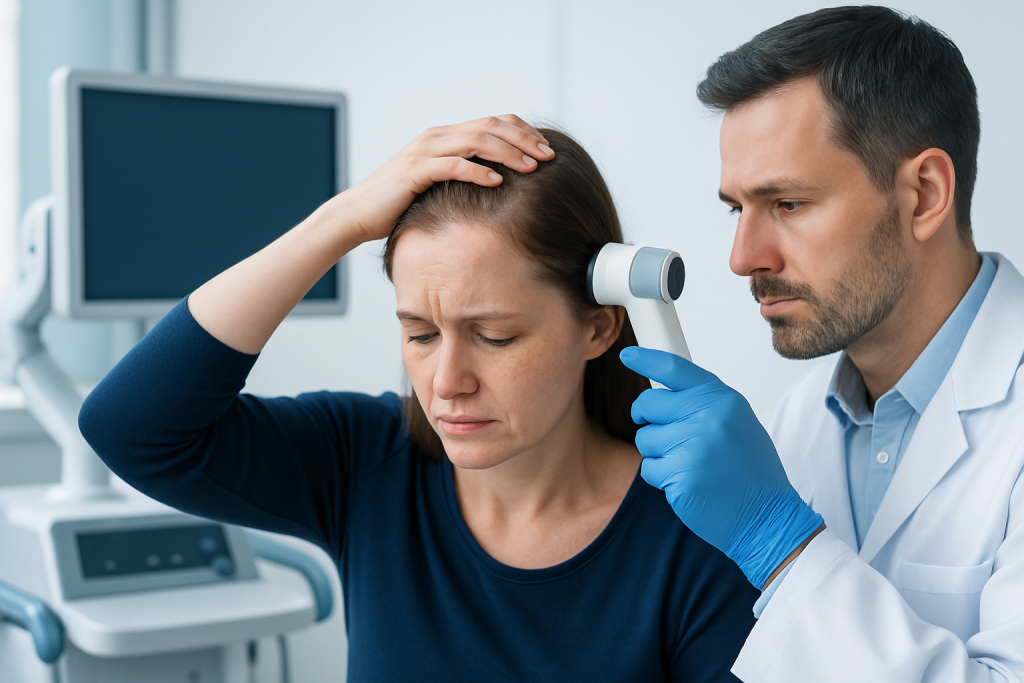
The scalp symptoms of seborrhoeic dermatitis can range from mild dandruff-like flaking to more noticeable redness and irritation. Some people mainly notice white or yellowish flakes on the shoulders, while others have greasy scale, burning, or an itchy scalp that becomes worse in cold weather, during stress, or after using certain hair products.
Hair loss related to seborrhoeic dermatitis is usually diffuse shedding rather than a single bald patch. It may be seen as more hair falling out during washing, more strands on pillows or clothing, or a feeling that the hair is thinner because the scalp is constantly inflamed.
- Itchy scalp
- Flaking or scaling
- Redness or mild swelling
- Greasy or yellowish patches
- Increased shedding with brushing or washing
- Tenderness from repeated scratching in some cases
If a person notices thick crusts, oozing, severe pain, or abrupt patchy hair loss, another condition may be present alongside seborrhoeic dermatitis. Those features deserve medical assessment rather than self-treatment alone.
Causes & Risk Factors

Seborrhoeic dermatitis does not come from poor hygiene. It is thought to involve a combination of skin sensitivity, oil production, and an overreaction to a naturally occurring yeast on the skin called Malassezia. The exact pattern varies from person to person, which is one reason why some people have occasional flakes and others have more persistent inflammation.
Several factors can make scalp symptoms more noticeable or harder to control. Stress, fatigue, cold dry weather, hormonal shifts, oily skin, certain neurological conditions, and some medications may all play a role. Hair products that irritate the scalp or heavy styling that traps oil can also make symptoms feel worse.
Hair loss usually happens indirectly. A scalp that is inflamed for a long time may lead to more shedding, and repeated scratching can break hairs or irritate the skin further. In addition, another cause of hair loss may be happening at the same time, such as telogen effluvium, iron deficiency, thyroid disease, psoriasis, or a fungal infection of the scalp.
Diagnosis
Doctors usually diagnose seborrhoeic dermatitis by examining the scalp and asking about symptoms, timing, hair-care habits, and any recent stressors or illnesses. The appearance of the scale and the pattern of redness often provide important clues, but a history of hair shedding helps determine whether the condition is likely contributing to hair loss.
In straightforward cases, no special test is needed. When the picture is less clear, a dermatologist may consider other causes of scalp scaling and hair loss, especially if the hair loss is patchy, severe, or associated with broken hairs. Depending on the findings, this may include looking for fungal infection, psoriasis, eczema, alopecia areata, or inflammatory scalp disorders.
Sometimes additional tests are helpful if the amount of shedding seems out of proportion to the scalp rash. Blood tests may be used to check for contributors such as iron deficiency or thyroid problems, because treating the scalp alone would not fully address hair loss if another issue is also present.
Treatment Options
Treatment aims to calm inflammation, reduce yeast overgrowth on the skin, and ease itching and scaling. Medicated shampoos are often a practical starting point for scalp involvement. Depending on the situation, a doctor may recommend antifungal shampoos, anti-inflammatory treatments, or alternating products to keep symptoms controlled over time.
When the scalp is very inflamed, short-term prescription treatments may be needed. These can include topical corticosteroids for flare control or other anti-inflammatory scalp preparations chosen by a dermatologist. If a yeast component is prominent, antifungal treatments may be added. The best plan depends on how extensive the dermatitis is, how sensitive the skin is, and whether there is also another scalp condition.
Hair loss itself is usually managed by treating the scalp problem first. Once itching and scaling improve, shedding often decreases gradually. If the hair loss continues after the dermatitis settles, a doctor may investigate other causes and discuss whether separate hair-restoration treatment is appropriate.
- Gentle medicated shampoos for the scalp
- Anti-inflammatory prescription lotions or solutions when needed
- Antifungal treatments if recommended by a clinician
- Supportive care for concurrent hair-loss causes
For international patients, treatment planning may include an initial specialist evaluation, a clear home-care routine, and follow-up instructions that can be continued after returning home. Acibadem Health Point’s multidisciplinary specialists and JCI-accredited hospitals diagnose and treat seborrhoeic dermatitis for international patients, with care coordinated around travel and recovery needs.
Prevention & Self-care
Seborrhoeic dermatitis tends to be a chronic condition that flares and settles, so day-to-day care matters. A calm scalp routine can reduce irritation and may help limit shedding caused by scratching or inflammation. Many people do better when they avoid over-washing, harsh scrubbing, and strongly fragranced styling products.
It can also help to let medicated shampoos stay on the scalp for the amount of time advised by a doctor, since quick rinsing may reduce their effect. Between washes, gentle brushing, sensible heat styling, and avoiding tight hairstyles can lessen extra strain on already fragile hair.
Useful self-care habits often include:
- Using a mild shampoo on non-treatment days if recommended
- Keeping the scalp clean without aggressive rubbing
- Managing stress, since flares often worsen during stressful periods
- Avoiding scratching, which can break hair and inflame the skin further
- Choosing light hair products that do not leave heavy residue
People with recurrent symptoms who are traveling for care should keep a simple written routine, including shampoo frequency and any prescribed scalp treatments. That makes it easier to continue treatment consistently after the clinic visit, especially when time zones, climate, or product availability differ from home.
When to See a Doctor
Medical review is a good idea when scalp flaking is persistent, uncomfortable, or not improving with basic self-care. It is especially important if the person notices increasing hair thinning, because treatment is more effective when the underlying cause is identified early.
A doctor should also evaluate the scalp if the hair loss is patchy, the skin is painful, there is drainage or crusting, or the symptoms are spreading beyond the scalp. These features can point to a different diagnosis or a second problem that needs specific treatment.
Seeing a dermatologist is also helpful when symptoms keep returning, the diagnosis is uncertain, or the person is planning care from another country and wants a structured treatment plan. A clear diagnosis can save time, reduce trial-and-error treatment, and make follow-up easier once travel is over.
Living With the Condition
Many people live comfortably with seborrhoeic dermatitis once they understand that it often behaves like a recurring skin condition rather than a one-time problem. The goal is not always to make the scalp perfectly quiet forever, but to keep flares mild, short, and manageable.
That perspective matters for hair loss too. When inflammation is controlled, the scalp environment becomes more favorable for normal hair cycling. People often notice that the shedding slows before the hair feels fully recovered, so patience and steady treatment can be part of the process.
Keeping notes about flare triggers, products used, and changes in shedding can help a dermatologist fine-tune treatment. For patients coordinating care internationally, those notes also make remote follow-up more efficient and help continuity between the treating team and local doctors at home.
Frequently Asked Questions
Can seborrhoeic dermatitis cause permanent hair loss?
It usually does not cause permanent hair loss on its own. Most shedding linked to seborrhoeic dermatitis is temporary and improves when the scalp inflammation is treated. If hair loss is patchy or continues after the scalp settles, another cause should be checked.
Why does my hair fall out more when my scalp is flaky?
Inflammation, itching, and scratching can all increase shedding or break hairs. The hair may also look thinner because the scalp is irritated and the shedding is more noticeable. Treating the scalp often reduces this extra loss over time.
Is dandruff the same as seborrhoeic dermatitis?
They are closely related, but seborrhoeic dermatitis is the broader inflammatory condition. Dandruff is often the mild scalp form, while seborrhoeic dermatitis can also cause redness, itching, and greasy scaling. A clinician can help tell the difference if symptoms are more pronounced.
What kind of shampoo helps most?
The best shampoo depends on the main problem on the scalp, such as yeast overgrowth, scaling, or inflammation. Medicated shampoos are often used, sometimes in rotation, but a doctor can guide the choice based on skin sensitivity and symptom pattern.
Should someone avoid washing their hair?
Usually not. Regular gentle washing can help remove scale and reduce buildup, while harsh scrubbing may make symptoms worse. A clinician can suggest a wash schedule that fits the severity of the scalp condition.
When should hair loss be investigated beyond seborrhoeic dermatitis?
If shedding is sudden, severe, patchy, or not improving after the scalp inflammation is treated, it should be assessed more broadly. Hair loss can have several causes, and more than one may be present at the same time.
Frequently asked questions
01Can seborrhoeic dermatitis cause permanent hair loss?
It usually does not cause permanent hair loss on its own. Most shedding linked to seborrhoeic dermatitis is temporary and improves when the scalp inflammation is treated. If hair loss is patchy or continues after the scalp settles, another cause should be checked.
02Why does my hair fall out more when my scalp is flaky?
Inflammation, itching, and scratching can all increase shedding or break hairs. The hair may also look thinner because the scalp is irritated and the shedding is more noticeable. Treating the scalp often reduces this extra loss over time.
03Is dandruff the same as seborrhoeic dermatitis?
They are closely related, but seborrhoeic dermatitis is the broader inflammatory condition. Dandruff is often the mild scalp form, while seborrhoeic dermatitis can also cause redness, itching, and greasy scaling. A clinician can help tell the difference if symptoms are more pronounced.
04What kind of shampoo helps most?
The best shampoo depends on the main problem on the scalp, such as yeast overgrowth, scaling, or inflammation. Medicated shampoos are often used, sometimes in rotation, but a doctor can guide the choice based on skin sensitivity and symptom pattern.
05Should someone avoid washing their hair?
Usually not. Regular gentle washing can help remove scale and reduce buildup, while harsh scrubbing may make symptoms worse. A clinician can suggest a wash schedule that fits the severity of the scalp condition.
06When should hair loss be investigated beyond seborrhoeic dermatitis?
If shedding is sudden, severe, patchy, or not improving after the scalp inflammation is treated, it should be assessed more broadly. Hair loss can have several causes, and more than one may be present at the same time.
This article is for general information only and is not a substitute for professional medical advice. Please consult a qualified doctor about your individual situation.
Hair transplant in Turkey — costs, graft counts & a free assessment
JCI-accredited · board-certified surgeons · reply within 24h
Add us as a Preferred Source to see more of our trusted health content across Google Search, AI Overviews and Discover.